AI Voice Cloning Scams Now Target Families — How to Spot Them Before You Send Money
Scammers are using AI to clone your loved ones' voices. Here's how to protect your family.

AI Voice Cloning Scams: How to Protect Your Family in 60 Seconds
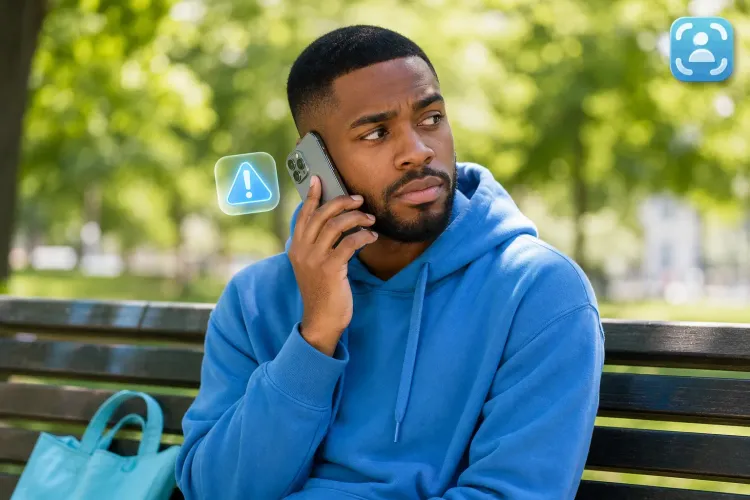
Your phone rings at 10:30 a.m. on a Tuesday. The screen shows No Caller ID. You answer, and it's your daughter, voice shaking, begging you to send $2,400 for bail after a car accident. She's crying. You recognize the slight lisp she's had since childhood. Then your actual daughter walks through the front door, safe, holding her coffee.
That's an AI voice cloning scam. Scammers can now create realistic voice clones using only a few seconds of publicly available audio. Every Instagram story, TikTok clip, or YouTube video your family posts gives criminals the raw material they need. The voices don't sound robotic anymore. They replicate breathing patterns, speech quirks, even background panic. Once you hear that familiar voice in distress, logic shuts down. That's exactly what scammers count on.
What you need to know:
- AI can clone a voice from a 3-second social media clip
- Fake emergency calls use time pressure to stop you from thinking
- Traceback reveals who's really calling before you pick up or call back
- Secret family code words and callback protocols shut down scams instantly
- You have 60 seconds to verify — never send money without taking it
How AI Voice Cloning Works (And Why It's So Convincing)
AI voice generators analyze pitch, cadence, accent, and speech patterns from short audio samples. A scammer scrolls your daughter's TikTok, downloads a 10-second clip of her laughing at a concert, and feeds it into free or cheap voice-cloning software. Minutes later, they can generate any phrase in her voice. The technology doesn't require a recording studio or technical expertise anymore. It runs on consumer laptops.
The emotional hook goes deeper than mimicry. These cloned voices replicate the tiny details that signal authenticity: the way your son clears his throat before asking for something, the specific uptalk pattern your spouse uses when stressed, even background noise that sounds like a police station or hospital corridor. Scammers layer these elements deliberately. They know you're listening for proof it's real, so they engineer that proof.
Your family's voices are already out there. If you've posted a video, left a voicemail greeting, appeared in a podcast, or been quoted in a local news clip, that audio is scrapable. Locking down new posts helps, but the back catalog is permanent. The FTC warns that scammers actively harvest social media for voice samples, then cross-reference names with public records to find phone numbers and family connections. They build a target profile before they ever dial.
The Anatomy of a Voice Cloning Scam Call
The script follows a pattern. First, the emergency: "Mom, I was in an accident and the other driver is hurt." Or "Dad, I got arrested, they're holding me at the station." Always urgent, always something that would make you drop everything. Then comes the time constraint: "I only have one call" or "The bail bondsman closes in an hour." Scammers know panic compresses decision-making time.
Next, the ask. It's rarely a round number. $2,400. $3,750. Specificity makes it feel real, like an actual bail amount or medical bill. The payment method is always irreversible: wire transfer via Western Union, gift cards read over the phone, crypto sent to a wallet address, or a peer-to-peer app like Zelle. Never a check, never a credit card you can dispute later. The final manipulation: "Don't tell Mom, she'll freak out" or "The lawyer said to keep this quiet until it's resolved." Isolation prevents you from verifying the story with someone who might think clearly.
Scammers time these calls deliberately. Weekday mornings when your spouse is at work. Late nights when you're alone and groggy. They've researched your family structure enough to know when you're most vulnerable. The call often comes from a blocked number or shows No Caller ID, which adds to the "I'm calling from a holding cell" narrative. That detail is also where Traceback can reveal who's actually calling before you engage with the caller.
How Call Reveal Works Against Voice Scams
When a No Caller ID call arrives, Traceback's conditional call forwarding captures the real number by redirecting blocked calls through a technical pathway that forces the network to expose the caller's actual line. The pause, that moment where you see an unfamiliar name or a number that doesn't match your family member's known contact, breaks the emotional momentum scammers rely on.
Say a call comes in claiming to be your son. Traceback reveals the caller is actually from a Miami number you've never seen, while your son's phone is a New York line. That mismatch is your red flag. You haven't sent money yet. You haven't said anything that confirms his identity or your relationship. You simply hang up and call your son's real number.
The tool works because scammers depend on you answering in a panic state, already halfway to compliance. Seeing hard data (an unknown number, a carrier mismatch, a location that doesn't fit) flips your brain back into verification mode. It's the circuit-breaker between emotional reaction and financial loss.
Your Family's 60-Second Verification Protocol
- Create a family code word or phrase today that only your immediate household knows, and agree never to share it on social media or with anyone outside the inner circle.
- Set a callback verification rule: if anyone calls asking for money or claiming an emergency, hang up immediately and call that person's known number directly from your contacts, never by redialing the incoming call.
- Download Traceback and enable conditional call forwarding on every family member's phone so hidden numbers are revealed in seconds.
- Designate an emergency verification contact outside your immediate family (a trusted friend, sibling, or neighbor) who can confirm or deny the story if your family member is unreachable.
- Practice the protocol once with your household, role-playing a fake emergency call, so when real panic hits, the verification steps are muscle memory.
- Review your social media privacy settings and limit who can see videos, voice messages, or stories. Set accounts to friends-only or delete old public posts with clear audio of your voice.
- Share this entire protocol with elderly parents, college-age kids, and anyone in your family who lives alone, since these groups are statistically the highest-risk targets for voice cloning scams.
Do this in the next 10 minutes. The scammer is already scraping voice samples. Your defense needs to be live before the phone rings.
The Lesson: Scammers Win When We Act Out of Love
Wanting to help someone you love is not gullible. It's human. Parents hear their child's voice in distress and every instinct says fix this now. That reflex kept our species alive for millennia. Scammers have simply figured out how to weaponize it with technology that didn't exist five years ago.
The gap between "I heard my daughter crying" and "I verified it was actually her" is where the money disappears. Traceback's reveal creates a forcing function: you must see the real number before you proceed. It's not cynicism. It's a checkpoint that preserves both safety and trust. You're not doubting your loved one. You're verifying the caller is who they claim to be. That distinction matters.
You now have a system. Code word. Callback rule. Conditional call forwarding active on every phone. Verification contact on speed dial. The next time a voice that sounds exactly like your son asks you to wire $3,000, you'll pause for 60 seconds. That pause is everything.
FAQ
How much audio does a scammer need to clone my voice?
As little as three seconds of clear speech. A single Instagram story, a voicemail greeting, or a YouTube comment reply with audio is enough for modern AI voice generators. The FTC confirms scammers actively harvest social media and public databases for these samples.
Can AI voice cloning fool voice biometric security systems?
Sometimes. Early-generation voice biometrics (like some bank phone systems) can be defeated by high-quality clones, though newer systems use liveness detection and multi-factor verification. The bigger risk is human ears, not automated systems. We're wired to trust familiar voices.
What should I do if a family member's voice has already been cloned?
File a report at reportfraud.ftc.gov and with the FBI IC3. Alert everyone in your contact list so they don't fall for calls claiming to be that person. Implement the callback and code-word protocol immediately. You can't delete the cloned audio from scammers' systems, but you can neutralize its effectiveness with verification steps.
Are voice cloning scams illegal?
Yes, they're illegal under federal wire fraud statutes. However, enforcement is inconsistent because scammers often operate overseas. Local police may refer you to the FBI or FTC. Documentation matters: save call logs, Traceback reports, and any messages. Even if prosecution is unlikely, the paper trail helps pattern analysis.
How does Traceback reveal the real number behind No Caller ID calls?
Traceback uses conditional call forwarding, which redirects unanswered or declined calls through a pathway that forces the carrier network to expose the originating number. When you decline a No Caller ID call or let it forward, Traceback captures the real number and surfaces the associated name in seconds. Learn more at Traceback's How It Works page.
What's the difference between conditional call forwarding and regular call forwarding?
Regular call forwarding sends all your calls to another number. Conditional call forwarding only redirects calls that meet specific criteria (unanswered, busy, unreachable, or blocked). Traceback uses conditional forwarding so your normal calls still come through directly. Only the hidden-number calls route through the reveal system.
Can scammers spoof caller ID to show my family member's actual number?
Yes. Caller ID spoofing is trivial with VoIP apps. If a call shows your daughter's known number but something feels off, hang up and call her back using a separately initiated call from your contacts. Do not redial the incoming call or use any number the caller provides. Traceback reveals hidden and No Caller ID calls. For spoofed IDs showing a fake number, your defense is the callback rule.
Will Traceback reports help if I file a police report?
Traceback reports provide documentation of the call's origin (number, timestamp, carrier) that you can save and share with authorities. Keep these reports as part of your evidence file when filing with the FTC, FBI IC3, or local police. They serve as contemporaneous records of the incident.
Start protecting your family today. Visit Traceback Pricing to enable call forwarding on every phone.
For more on unmasking suspicious callers, see How to Find Out Who Called From No Caller ID (Every Method Compared) and TrapCall Alternative: How Traceback Reveals Hidden and No Caller ID Calls.
The AARP Fraud Watch Network also tracks voice cloning scams targeting older adults. If your parents or grandparents are at risk, share this protocol with them today.
By the Traceback Editorial Team · Last reviewed August 2026
Traceback is a caller ID reveal app built by a studio of software engineers and operators. Our app has revealed 167,000+ hidden and No Caller ID calls for 34,000+ people. We cite primary sources inline and review every article before publishing.
⚠️ Disclaimer: This article is general information only and does not constitute legal advice. For any specific legal situation, consult a qualified attorney. Traceback is not responsible for legal outcomes.