FTC warns: The agency will never threaten to deactivate your phone number
New scam exploits trust in the FTC itself. Here's how to verify who's really calling

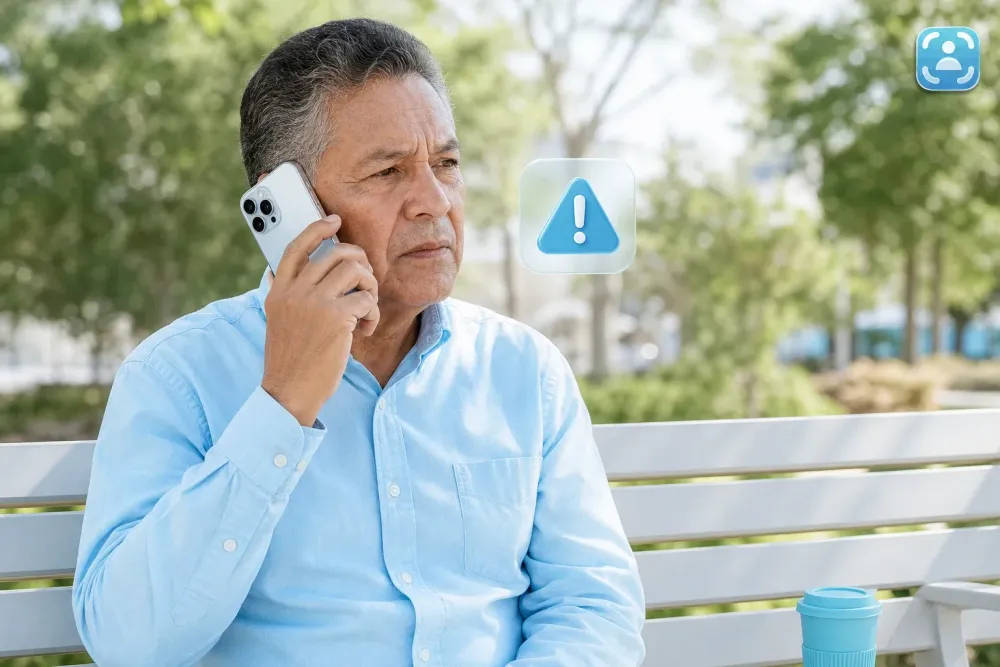
The caller ID flashes "Federal Trade Commission." Your screen shows what looks like a Washington, D.C. number. A voice warns that your phone number has been flagged for fraudulent activity and will be deactivated within 24 hours unless you verify your identity. The agency you'd call to report a scam is now the scammer's mask.
The FTC will never call to threaten you, demand payment, or ask for personal information to "reactivate" your number. If you receive a call like this, you're speaking to a criminal, not a federal regulator.
The FTC phone scam: what callers are saying
A caller claims to represent the Federal Trade Commission, using the agency's real name and official-sounding language. They warn that your phone number has been linked to identity theft, fraud investigations, or suspicious account activity. They threaten immediate deactivation unless you take urgent action: confirm your Social Security number, provide bank details to "verify your identity," or transfer funds to a "secure holding account" while the issue is resolved.
Some variations reference specific enforcement actions. The caller might mention the TCPA, a pending lawsuit, or a federal database that requires your update. Others claim your number was used in a robocall campaign and you face fines unless you comply. The hook is always the same: you must act now or face severe consequences.
The urgency is designed to short-circuit your judgment. Scammers count on panic to override skepticism.
Why caller ID says "FTC" when it's not
Caller ID spoofing makes these scams feel legitimate. Scammers manipulate the number that appears on your screen using Voice over IP (VoIP) services that let them input any caller ID they want. The technology is cheap, widely available, and legal for certain uses (businesses often spoof their main switchboard number when calling from internal extensions). Criminals exploit the same systems to impersonate government agencies, banks, and law enforcement.
Your phone cannot distinguish between a real call from the FTC and a spoofed call displaying the FTC's public number. Caller ID was never designed as a security feature, only a convenience. It shows what the caller's system transmits, not what the number actually is. Spoofing bypasses every visual cue you rely on: the agency name, the D.C. area code, even the format of the number itself.
The FCC has mandated STIR/SHAKEN authentication to combat spoofing, but the system is incomplete. It works only when both the originating and receiving carriers participate, and scammers route calls through carriers that don't authenticate. No app can reveal where a spoofed call really comes from, so with spoofed calls the rule is simple: hang up and call the agency back on its official number.
Many of these callers skip spoofing and hide their number completely, so the call shows up as No Caller ID or Blocked. That's the case Traceback handles: when you decline a hidden call, conditional call forwarding sends it to Traceback, which reveals the real number and shows a name when it's in our database or your contacts.
What to do right now
- Hang up immediately if anyone claiming to be the FTC threatens you over the phone.
- Visit FTC.gov and use the official contact number (1-877-FTC-HELP) to verify whether the agency attempted to reach you.
- If the call comes in as No Caller ID or Blocked, decline it. With Traceback set up, you'll see the real number behind it.
- Report the scam to the real FTC using reportfraud.ftc.gov and include the caller ID that appeared on your screen.
- Share this warning with elderly family members, who are disproportionately targeted in government impersonation scams.
FAQ
What is the FTC phone number?
The FTC Consumer Response Center is reachable at 1-877-FTC-HELP (1-877-382-4357), Monday through Friday, 9 a.m. to 8 p.m. Eastern. This is the number you call to report fraud or ask questions. If someone calls you claiming to be the FTC and threatens enforcement action, hang up and call this number directly to verify.
How do I contact the FTC by phone?
Call 1-877-382-4357 during business hours (9 a.m. to 8 p.m. ET, weekdays). You'll reach a live representative who can help you file a complaint, answer questions about scams, or direct you to the correct resources. The FTC also accepts reports online at reportfraud.ftc.gov, which is faster than waiting on hold.
Does the FTC call consumers?
Rarely, and only in specific circumstances. The FTC may call if you filed a complaint and they need additional information for an active investigation. They will never threaten you, demand immediate payment, ask for your Social Security number or bank details over the phone, or claim your phone number will be deactivated. If you're unsure whether a call is legitimate, hang up and call the FTC directly at 1-877-382-4357.
How to report phone scams to the FTC?
File a report at reportfraud.ftc.gov. The online form takes about five minutes and captures details the FTC uses to track scam patterns and coordinate enforcement. You can also call 1-877-382-4357 to report by phone. Include the caller ID that appeared, the script the caller used, and any information you provided, even if you realized it was a scam afterward. The FTC shares this data with law enforcement nationwide.
Can scammers fake any phone number?
Yes. Scammers can spoof any number, including government agencies, local area codes (neighbor spoofing), your own number, or toll-free numbers that look official. The only limitation is that they cannot control what happens when you call the spoofed number back: you'll reach the real owner of that number, not the scammer. This is why verification always requires you to hang up and dial the official number yourself, never use a callback number the scammer provides.
How do I know if a call is really from the FTC?
The FTC will never call to threaten you, demand payment, or request sensitive personal information. If you receive a call claiming to be the FTC, hang up without engaging. Look up the official FTC contact number on FTC.gov, not through a search engine, which can surface fake results. Call that number directly and ask whether the agency attempted to reach you. If the call came in as No Caller ID, Traceback can reveal the real number after you decline it.
What happens if I gave information to a fake FTC caller?
If you provided your Social Security number, contact the three credit bureaus (Equifax, Experian, TransUnion) and place a fraud alert or credit freeze. If you shared bank details or made a payment, contact your bank immediately to reverse the transaction and close compromised accounts. Report the incident to the FBI's Internet Crime Complaint Center (IC3) and file a report with the real FTC at reportfraud.ftc.gov. Monitor your accounts for unauthorized activity and consider filing a police report to create a paper trail.
Scammers bet on your trust in institutions. Now you know the real FTC will never threaten you over the phone. And when a scam call hides its number completely, Traceback reveals who's behind it. Visit us.trytraceback.com/pricing to explore plans and start your free trial.
⚠️ Disclaimer: This article is general information only and does not constitute legal advice. For any specific legal situation, consult a qualified attorney. Traceback is not responsible for legal outcomes.
Tom Aflalo is co-founder of Traceback, the app that reveals the real number behind hidden and No Caller ID calls. He works on the product and on the guides in this blog and help center, which are checked against how the app actually works.
feedback@trytraceback.com